Artificial intelligence is showing up everywhere in trucking: from smart dispatch apps to automated document capture and fuel optimization tools. For many owner-operators, that raises a fair question:
Is AI here to replace me—or help me?
For the foreseeable future, especially at the small-business level, AI should be treated as a platform enhancement, not a replacement for human judgment. The most successful use cases look like human + machine, where the owner-operator stays firmly in control while AI handles repetitive, data-heavy tasks in the background.
This guide lays out best practices for integrating AI into an owner-operator or very small carrier business: what it can do, what it shouldn’t do, and how to build a collaborative “copilot” model instead of a fear-based one.
What Can AI Actually Do for an Owner-Operator?
It helps to start with a clear view of what AI is good at:
- Pattern recognition and data crunching: Parsing rate histories, lane performance, detention trends, and documents faster than a human.
- Automation of repetitive tasks: Filling in forms, extracting data from rate confirmations, generating emails, tracking loads, and sending status updates.
- Decision support: Suggesting likely profitable lanes, flagging high-risk loads, estimating fuel cost by route, and highlighting anomalies in your numbers.
What it’s not good at (on its own):
- Understanding your personal goals (home time, stress tolerance, risk appetite).
- Managing relationships with brokers, shippers, and other drivers.
- Taking responsibility when something goes wrong.
That’s why the most realistic model for a one-truck business is:
AI handles the grunt work. You keep the steering wheel, literally and figuratively.
Principle 1: Keep Yourself as the Decision-Maker
AI tools can suggest loads, routes, or negotiation ranges. They should not be the ones committing your truck or making final financial decisions.
Best practices:
- Use AI-enhanced systems to rank load options by rate per mile, deadhead, and historical performance, but you choose which to book based on context.
- Let AI draft rate-confirmation emails or messages, but you review and send them.
- Use AI to flag unusual terms in a rate confirmation (e.g., onerous fines or unclear lumpers), but you decide whether to accept or push back.
Your rule of thumb: If it affects your money, your safety, or your reputation, it needs your eyes on it, even if AI did the first pass.
Principle 2: Start with Low-Risk, High-Value Tasks
There’s no need to adopt every AI feature at once. Begin where AI’s strengths are obvious, and the downside risk is low. Good starting areas:
1. Document handling
- Automatically extract pickup/delivery addresses, dates, rates, and accessorials from rate confirmations.
- Pull line-items from BOLs and PODs into your TMS or accounting system.
- Use AI to sort and rename scanned documents so you can find them later.
2. Email and communication support
- Have AI summarize long email threads so you can catch up quickly.
- Use it to draft responses to brokers and customers in a clear, professional tone.
- Generate standard templates (check-call emails, arrival notices, “request for updated rate” messages) and customize as needed.
3. Simple analytics and reporting
- Let AI generate quick snapshots:
- Top 5 lanes by profit
- Average rate per mile last month
- Fuel spend vs. revenue
- Use those snapshots to guide where you focus your calls or which lanes to prioritize.
These are all tasks where AI can save you time, but a mistake is unlikely to wreck your week.
Principle 3: Use AI to Reduce Cognitive Load, Not Add It
Many owner-operators are already running on mental overload: loads, hours of service, maintenance, family, or bills. The best AI use is where it reduces mental clutter.
Examples:
- A consolidated “Morning Brief”: one screen that shows current loads, ETA, upcoming appointments, and any alerts about weather or HOS, driven by an AI layer that pulls from your ELD, email, and calendar.
- A simple dashboard of “today’s top three priorities” generated from your data (e.g., negotiate a higher rate on X load, send paperwork for Y delivery, call shop about Z warning light).
- Voice-assisted note-taking: while parked, you dictate notes after a load (“slow unloading at this receiver”) and AI turns that into structured tags for future reference.
If a tool is forcing you to click through ten screens or learn a complex new workflow, it may not be the right fit for a one-person operation, even if it’s technically “AI.”
Principle 4: Keep Your Relationships Human
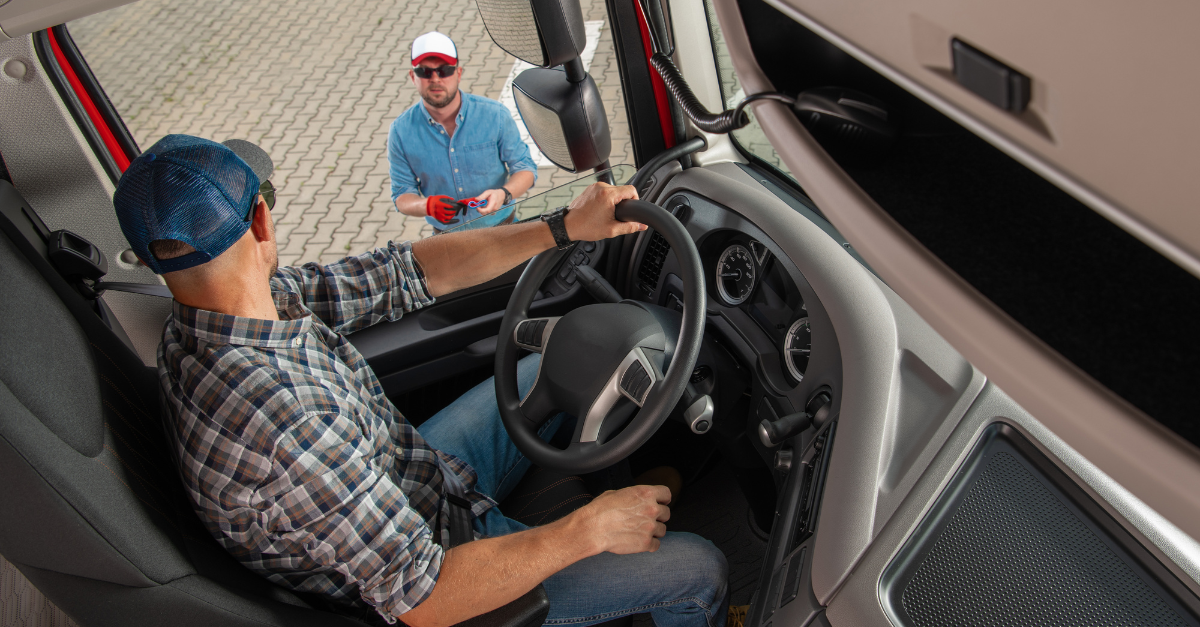
One of the real advantages owner-operators have over large fleets is personal relationships:
- A broker who knows you’re reliable and calls you first.
- A shipper who trusts you with sensitive or urgent freight.
- A shop that squeezes you in because you’re a loyal customer.
AI can help maintain those relationships, but it shouldn’t replace them.
Use AI to:
- Organize contact history and remind you who you haven’t spoken to in a while.
- Suggest times to reach out (“X broker hasn’t given you a load in 60 days; check in?”).
- Draft polite “check-in” messages or holiday notes.
But:
- Make the actual phone calls yourself when it matters.
- Deal with problems and escalations person-to-person.
- Let people hear your voice, not just canned emails.
Relationships are where human operators beat algorithms.
Principle 5: Be Transparent About AI Use When It Involves Others
If you expand into dispatching other trucks or running a micro-fleet, your use of AI may affect other drivers and partners. It’s important to be honest about how you’re using it.
Guidelines:
- If you use AI to manage check-calls or send automated updates, tell drivers and brokers:
- “You’ll sometimes get automated text updates from our system; if something looks wrong, call me.”
- If you use AI to monitor driving patterns (e.g., telematics-based risk scoring), be clear about:
- What’s being tracked
- How the data is used (coaching vs. punishment)
- What rights do drivers have to review or discuss that data
Trust is easier to keep than to repair. AI should support your reputation, not undermine it.
Principle 6: Set Limits and Review Regularly
Treat AI tools like you would a new dispatch assistant: you train them, give them boundaries, and review performance periodically.
Every month or quarter, ask:
- Where is this tool saving me time or money?
- Where is it creating confusion or double work?
- Am I over-automating anything that really needs human attention?
- Do I still understand my numbers, or am I blindly trusting a dashboard?
If an AI feature isn’t clearly helping, turn it off or scale it back. You’re running a truck, not a science experiment.
Putting It All Together: Human + Machine as a Competitive Advantage
For an owner-operator, the winning formula looks like this:
- Let AI handle repetitive, data-heavy, or clerical tasks (documents, summaries, simple analytics).
- Keep humans (you) in charge of strategy, relationships, safety, and final decisions.
- Start with low-risk uses and build up as your comfort grows.
- Regularly evaluate the tools against your real-world needs: cash flow, home time, stress level, and long-term business goals.
AI is not going to get a CDL, sit in traffic, or talk a difficult shipper into working with you again. But it can absolutely sit in the background, keeping your paperwork clean, your options visible, and your mental bandwidth freer.
The future of small trucking businesses isn’t “human vs. machine.” It’s human + machine, where smart owner-operators use technology as leverage, not as a replacement for their own judgment, grit, and experience.